
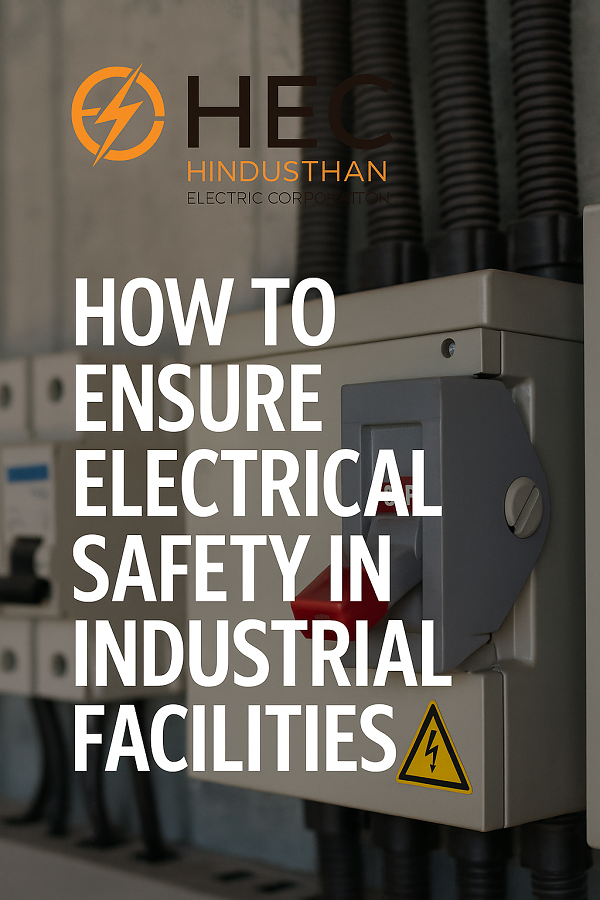
In industrial environments, electrical safety is not just a best practice—it’s a legal and operational necessity. With high power loads, heavy machinery, and multiple circuit systems, one fault can lead to expensive damage or even life-threatening hazards. Implementing an effective electrical safety strategy protects your people, property, and profits.
1. Use Certified Switchgear and Components
Start by installing reliable MCBs, MCCBs, relays, contactors, and panels. Using IEC-compliant and ISI-marked components significantly reduces the risk of fire, short circuits, and overloads.
2. Implement Preventive Maintenance
Schedule regular inspections for your entire electrical infrastructure. This includes thermal scanning, insulation resistance testing, and checking for loose connections, corrosion, or signs of overheating.
3. Control Overloading
Overloaded circuits are a common source of electrical fires. Analyze your load distribution and install load management systems to evenly spread energy consumption across circuits.
4. Maintain Proper Grounding and Bonding
Earthing ensures that in case of a fault, excess current is safely diverted. Proper grounding also stabilizes voltage levels and minimizes equipment failure caused by surges
5. Train Your Workforce
A safe system is only as strong as its operators. Train your technical and maintenance staff on lockout/tagout procedures, first aid for electrical injuries, and emergency shutdown operations.
6. Modernize Protection Systems
Install surge protection devices (SPDs), earth leakage circuit breakers (ELCBs), and smart monitoring tools that offer real-time fault diagnostics and alerts.
7. Post Clear Labels and Warnings
Use signage to identify high-voltage areas, emergency cut-off points, and danger zones. This helps workers react quickly and confidently in emergencies.
Conclusion
Electrical safety in industrial setups is not a one-time checklist—it’s a continuous process. At Hindusthan Electric Corporation, we supply premium-grade switchgear and offer tailored solutions to improve safety, reliability, and efficiency in your facility.